


🌸 What is pollination?
When a bee forages on a flower, it collects nectar… but it also carries pollen. By moving from one flower to another, it enables the fertilization of plants. This invisible but essential mechanism is called pollination. Thanks to it, plants produce seeds, fruits, and reproduce naturally.
🔍 Example: without pollination, no strawberries, apples, zucchinis… or even chocolate!
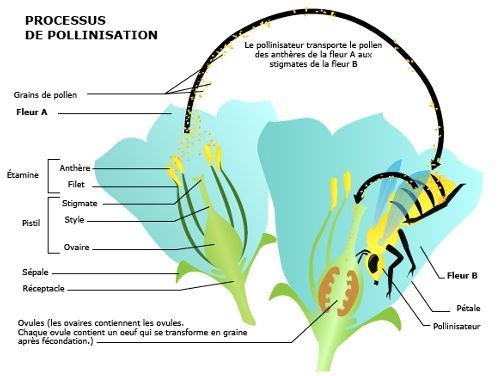
🐝 Why are bees so effective?
Their bodies are covered with hairs, perfect for catching pollen grains. On top of that, they are very organized: a single colony can visit several thousand flowers per day! Other insects also pollinate flowers: bumblebees, butterflies, beetles, mosquitoes… but domestic and wild bees remain the champions.
⚠️ Yet today, bees are in danger. Pesticides, loss of wildflowers, diseases, climate change… so many threats that weaken their role in nature.
🧠 What if we learned to understand them better in order to protect them better?
Children can become true allies of pollinators by understanding their key role and discovering the magic of flowers.
🎯 Educational activities
1. 🌼 Classe chez le fleuriste : anatomie d’une fleur et pollinisation (Cycles 2-3)
Objective: to discover the role of flowers in plant reproduction and understand how bees pollinate them. Procedure: contact a florist near the school and propose a 30‑ to 45‑minute visit. On site, pupils will be able to observe flowers up close, learn to identify pistil, stamens, and pollen, and understand why certain flowers attract insects.
🧰 Materials: sketchbook or camera, floral vocabulary sheets, magnifying glasses if possible. 📺 Inspirez-vous de cette belle initiative : vidéo Instagram
2. 🐝 Build your solitary bee shelter (from Cycle 2 onward)
Objective: to create a shelter for wild bees, to be installed in the schoolyard or at home.
This hands‑on and collaborative activity allows pupils to build a solitary bee nest using simple materials. It also encourages them to observe their environment to choose the right location: a quiet, sunny place sheltered from rain.
🧰 Materials:
- 1 wooden log
- 2 boards of the same size
- 1 screwdriver + Torx bit (no. 20)
- 1 drill bit
- 4 screws
🔧 Procedure:
- Drill 5 to 6 holes in the log, as deep as the drill bit allows (these holes will serve as nesting chambers for the bees).
- Assemble the boards by drilling and then screwing in two screws to form a roof.
- Attach the roof to the log using the remaining two screws.
- Check that the holes are clearly visible on the front of the nest: they must be unobstructed so insects can settle in.
📍 Installation: Place the shelter facing south, well exposed to the sun. Solitary bees will lay their eggs there, sheltered from wind and humidity.